
 STATEMENTS
STATEMENT by the Permanent Representative of Turkmenistan to the United Nations on behalf of the Group of Friends of Neutrality for Peace, Security and Sustainable Development
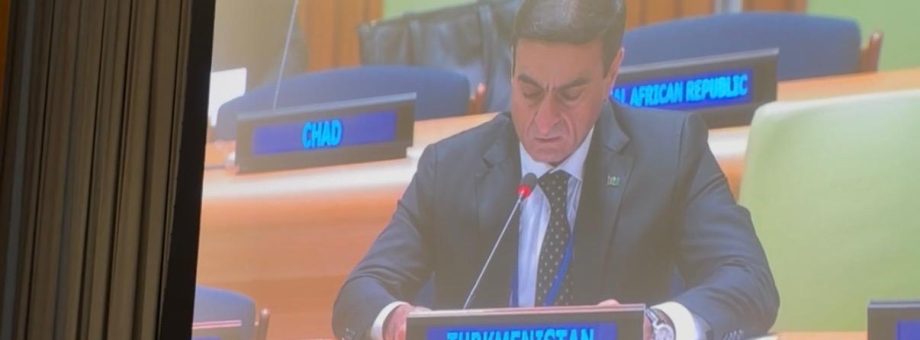
Event: High-Level Forum on the Implementation of the Programme of Action on a Culture of Peace
Theme: "Women's Leadership to Promote a Culture of Peace"
Date: 2 September 2026, United Nations Headquarters, New York
Excellencies,
Distinguished Delegates,
I have the honour to deliver this statement on behalf of the Group of Friends of Neutrality for Peace, Security and Sustainable Development.
At the outset, the Group expresses its appreciation to the President of the General Assembly for convening this High-Level Forum and welcomes its timely focus on "Women's Leadership to Promote a Culture of Peace."
The Group welcomes the recent adoption of General Assembly resolution 80/294, "Follow-up to the Declaration and Programme of Action on a Culture of Peace." At a time of growing geopolitical tensions, conflicts, mistrust and polarization, its message is particularly relevant: peace must not be understood simply as the interval between phases of conflict. It must be actively built and sustained through dialogue, mutual respect, inclusion, justice and cooperation.
For the Group of Friends, the culture of peace and the principles of neutrality are closely interconnected.
This connection has been further reinforced by the recent General Assembly resolution 80/262, "The role and importance of a policy of neutrality in maintaining and strengthening international peace, security and sustainable development."
The resolution recognizes that neutrality can embody responsibility rather than indifference, reflecting a principled commitment to conflict prevention through impartiality, good offices, mediation and confidence-building.
Neutrality does not mean standing aside from the cause of peace. It means creating space for peace.
It can create space for dialogue where confrontation prevails, mediation where positions diverge, and trust where confidence has been lost.
Resolution 80/262 also recognizes the work of our Group in maintaining a broad multilateral dialogue on the practical implementation of neutrality in preventing conflicts, addressing their root causes and consequences and resolving humanitarian challenges.
Our approach is simple: prevention is better than escalation; dialogue is stronger than isolation; and trust must be built before crises become conflicts.
Excellencies,
Today's theme reminds us that no sustainable culture of peace can be built without the full, equal, meaningful and safe participation and leadership of women.
Women must not be viewed only as beneficiaries of peace. Women are mediators, negotiators, community leaders, diplomats, educators, peacebuilders and decision-makers.
Their participation strengthens the legitimacy of peace processes and brings perspectives essential for addressing the underlying causes of instability.
The Group therefore welcomes the strong emphasis in resolution 80/294 on gender equality and the empowerment of women and girls, and on advancing women's full, equal and meaningful participation in conflict prevention, peacebuilding and activities promoting a culture of peace.
We believe these commitments should translate into practical action.
First, women should be meaningfully represented in preventive diplomacy, mediation and peace negotiations from their earliest stages.
Second, greater support should be provided to women mediators, peacebuilders and women-led organizations, including through capacity-building and professional networks.
Third, women's leadership should be further integrated into preventive diplomacy. Engagement with women leaders and local communities can help identify tensions before they develop into conflict.
Fourth, education must remain central. A culture of peace begins long before negotiations start - in families, schools and communities, through respect, tolerance, equality and the rejection of violence.
Distinguished Delegates,
Neutrality can provide additional opportunities for such inclusive diplomacy. Neutral venues can facilitate communication when direct engagement becomes difficult and provide platforms for women mediators, civil society and other peace actors.
Our collective task is to move from declarations to prevention, from participation to leadership, and from dialogue about peace to practical mechanisms for building it.
The Group of Friends stands ready to contribute to this effort.
We remain convinced that neutrality, dialogue, trust and women's leadership are mutually reinforcing instruments for sustaining peace.
In an increasingly divided world, we need more spaces where States can meet without confrontation, opposing sides can communicate, and women can participate not at the margins of peace processes, but at their very centre.
This is the culture of peace that our Group supports.
Thank you.