 NEWS
NEWS
One Year Since the Awaza Conference: United Nations Marks International Day for Landlocked Developing Countries
On 6 August 2026, the United Nations marked for the first time the International Day for Awareness of the Special Development Needs and Challenges of Landlocked Developing Countries (LLDCs) (official UN information).
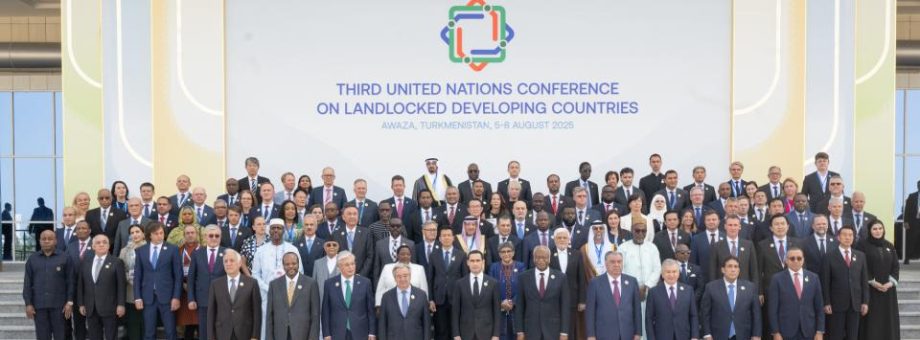
The observance of the International Day has particular significance in the context of the outcomes of the Third United Nations Conference on Landlocked Developing Countries (LLDC3), held one year ago, from 5 to 8 August 2025, in the Awaza National Tourist Zone in Turkmenistan.
The hosting of the Conference in Turkmenistan reflected the country's consistent policy, pursued under its Leadership, to advance international transport cooperation, strengthen connectivity and promote the interests of landlocked developing countries. Turkmenistan provided an international platform for bringing together Member States, the United Nations system, international financial institutions, the private sector and other partners around a new ten-year development agenda for LLDCs.
The key outcomes of the Conference included the formal endorsement of the Awaza Programme of Action for Landlocked Developing Countries for the Decade 2024-2034 and the adoption of the Awaza Political Declaration (LLDC3 outcomes on the UN website).
One year after the Conference, the decisions advanced in Awaza are progressively being translated into practical implementation. The Awaza Programme of Action has become the principal long-term UN framework for supporting the world's 32 landlocked developing countries and identifies five interconnected priority areas: structural transformation and science, technology and innovation; trade, trade facilitation and regional integration; transit, transport and connectivity; enhancing adaptive capacity, strengthening resilience and reducing vulnerability to climate change and disasters; and means of implementation.
An important result of the initial stage of implementation has been the development of the Roadmap and Monitoring Framework for the Awaza Programme of Action (UN Roadmap and Monitoring Framework). This mechanism maps and monitors the activities of the United Nations system and other international organizations across all five priority areas of the Programme.
To translate global commitments into concrete measures at the national level, the Office of the United Nations High Representative has also developed Guidelines for Mainstreaming and Monitoring the Implementation of the Awaza Programme of Action at the National Level. The Guidelines are designed to support the integration of the Programme's priorities into national development strategies and plans, strengthen institutional coordination and improve mechanisms for financing, monitoring and reporting (UN Guidelines).
Practical work on trade and transport connectivity is also continuing. In May 2026, a global United Nations workshop for LLDCs focused on strengthening trade and transport connectivity. At the same time, the UN system continues to coordinate the implementation of the Awaza Programme at the global, regional and national levels through relevant inter-agency mechanisms (UN work on LLDCs).
Thus, one year after the Conference in Awaza, its outcomes are receiving practical follow-up throughout the United Nations system. The decisions advanced in Turkmenistan are progressively being translated into concrete mechanisms for implementation, monitoring and international cooperation.
The consistent attention of the Leadership of Turkmenistan to the development needs of LLDCs, sustainable transport and international connectivity contributes to keeping these issues high on the global agenda. The Awaza Programme of Action, which received strong political momentum at the Conference hosted by Turkmenistan, now provides a long-term framework for international cooperation aimed at advancing sustainable development and the fuller integration of landlocked developing countries into the global economy.